

THE HISTORY OF HLJÓMAHÖLL
CHAPTERS:
THE BEATLES TOWN & HLJÓMAHÖLL
News emerged in March 2004 that a proposal had been put forward to build a music and conference center adjacent to the community house Stapi in Ytri-Njarðvík. Árni Sigfússon, the Mayor of Reykjanesbær, presented the idea at public meetings held across the municipality. It was stated that the Reykjanesbær Music School would form the core of the building’s activities, and that the facility would include space for choirs and music groups. It was also planned that the Pop Music Museum would be given space in the new building. According to reports, the owners of Stapi were interested, and at the time Reykjanesbær held a 33% ownership stake in the property, a share that transferred to the town when the municipalities of Keflavík, Njarðvík, and Hafnir merged under the name Reykjanesbær.
The idea was introduced to gather feedback from as many residents as possible regarding the establishment of a holding and operating company for the project. It was made clear that no final decision had yet been taken on constructing a music and conference center in the town. The proposal was generally well received by residents, many of whom found it an exciting opportunity.
A proposal to begin negotiations with the holding company Fasteign ehf. was approved by the town council with votes from representatives of the Independence Party, while A-list representatives voted against it. The Reykjanesbær executive committee entered into negotiations with Fasteign in September 2007 to begin preparations and carry out renovations of the community house Stapi. The projected cost of constructing facilities for the music school and the pop music museum was estimated at 1.5 billion ISK. The plan was to move quickly and have the building ready for use within two years. At this point, the building was given the name Hljómahöll, with the clarification that the name was not connected to the famous Keflavík Beatles-inspired band Hljómar. It was reported that the Reykjanesbær Music School would receive state-of-the-art teaching facilities, and that the building would include excellent concert and recording spaces.
Many expressed concern that Stapi itself would be sacrificed in the process, but it was announced that the Stapi Hall would be renovated and the entire building modernized so it could continue to serve its role as the municipality’s community house according to current standards. The only structure planned for demolition was the southern extension where Fjörheimar had been located; that activity would be moved elsewhere. Böðvar Jónsson, chairman of the executive committee, stated that the Pop Music Museum would be given suitable long-term facilities, and that the building would include conference rooms for small and medium-sized conferences. Ragnar Atli Guðmundsson coordinated all aspects on behalf of Fasteign, which in practice served as the project’s construction lead.
PREPARATION
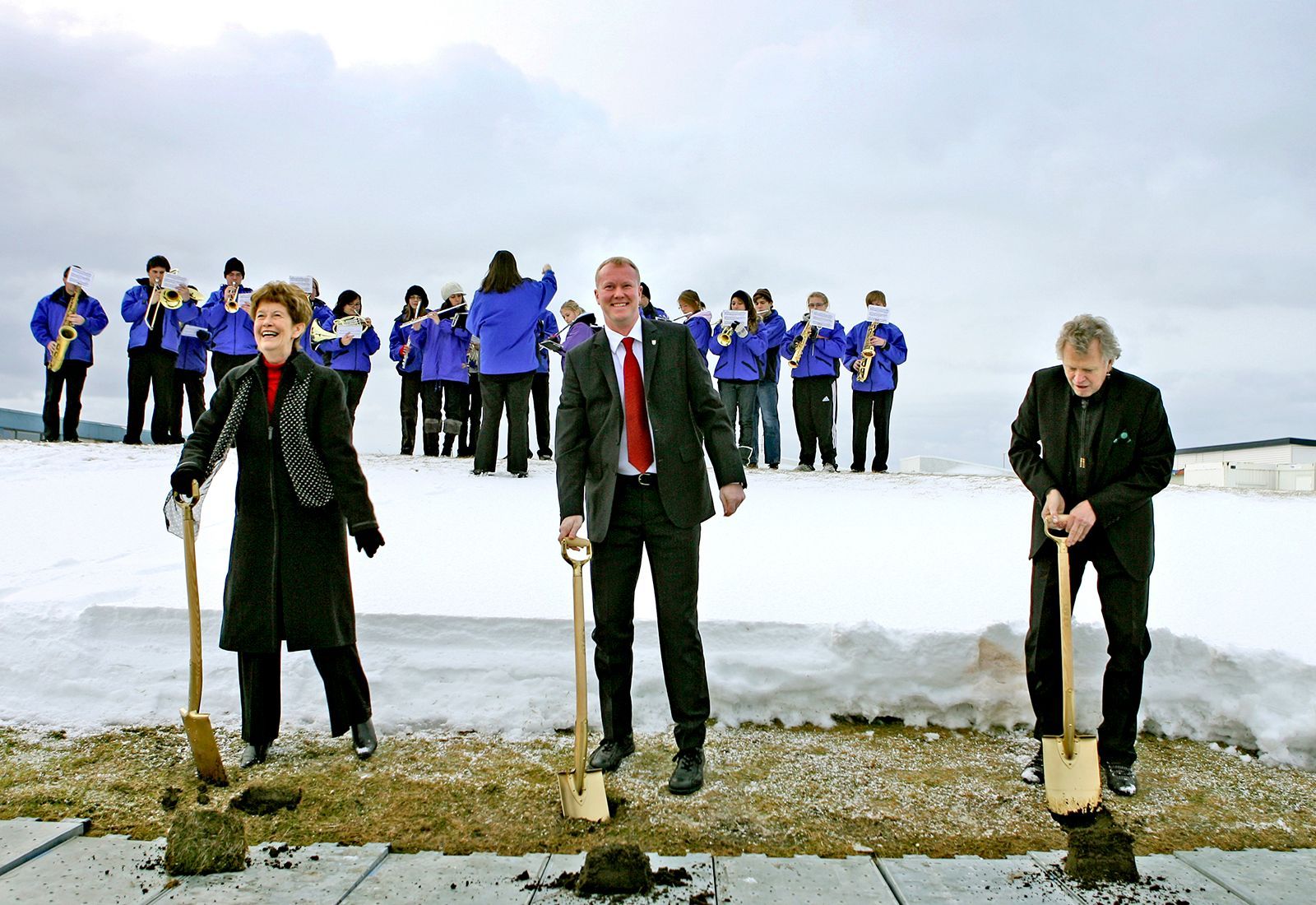
A preparatory committee carried out a needs assessment for the new building. It was projected that the school would accommodate 600 students and that the Pop Music Museum would be given a substantial space inside the facility. Study visits were undertaken to other countries to examine how pop museums were structured, after which planning and design work began. The new Hljómahöll was designed by the architect Guðmundur Jónsson, based in Norway, who had also designed Vikingaheimar. Guðmundur brought extensive experience in designing cultural buildings across the Nordic countries and proposed highly interesting ideas regarding the use of digital and interactive technology in diverse ways. The software company Gagarín was contracted to handle this part of the project, while THG Arkitektar oversaw and supervised all construction work. The person responsible for that oversight was Samúel Guðmundsson, a building technology engineer. The project manager representing Reykjanesbær was Haraldur Árni Haraldsson, principal of the Reykjanesbær Music School. The groundbreaking ceremony took place on 26 January 2008 and was conducted by music teacher Ragnheiður Skúladóttir, Rúnar Júlíusson, and Böðvar Jónsson. Construction began in February, with initial plans calling for completion in June 2009. Atafl, the contracting company, served as the main contractor and managed individual project elements and subcontractors, including hiring contractors for various components of the work.
Among those in the preparatory and idea group for Hljómahöll, which met regularly, were Jakob Frímann Magnússon and Rúnar Júlíusson, one of the project’s chief driving forces. Jónatan Garðarsson was hired to document Icelandic pop history, prepare the texts intended for the upcoming museum, and draft the first exhibition. Rúnar and Jónatan worked closely together at this stage, and Björn G. Björnsson soon joined the group. Björn was hired to design and install the exhibition itself, drawing on his extensive experience in such work. When Rúnar passed away suddenly in December 2008, he and Jónatan were in the midst of preparing the collection of pop memorabilia and artefacts. His death was a heavy blow to all involved, but it strengthened the resolve to complete the project and honour Rúnar’s memory by ensuring the Pop Music Museum would become a reality within Hljómahöll.
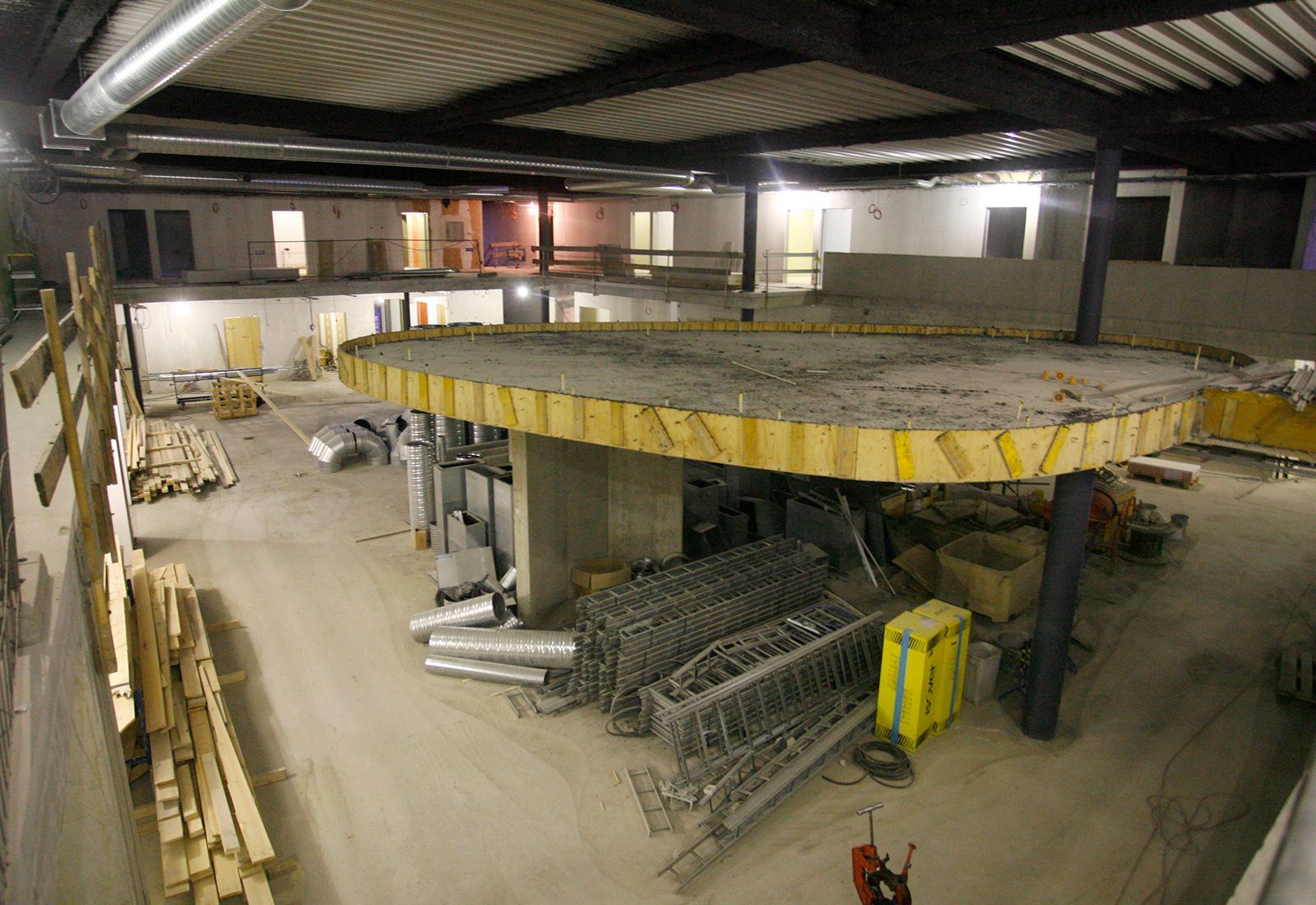
This was not the only setback. In autumn 2008, the global financial crisis struck the Western world, causing the Icelandic banking system to collapse. This turned everything upside down and created great uncertainty about the future. Despite this, the decision was made to continue, but to reduce the project’s scope where possible without compromising the overall vision. This unexpected situation led to a revision of the building’s construction and cost estimates.
DESIGN AND CONCEPT DEVELOPMENT
In the early stages of the project, discussions were held about constructing a spacious basement beneath the entire building, where the main part of the pop music exhibition would have suitable facilities. Due to the high cost of such construction, the idea was abandoned. When the preparatory group visited pop museums abroad, they noted how many of them were built with enclosed, windowless rooms that made it easy to work with interactive multimedia content. This was one of the points architect Guðmundur emphasized strongly in his conceptual work. There were extensive discussions about whether it would be possible to create holograms of Hljómar, allowing visitors to participate in a musical performance with the band and then take home a recording of the result. A Norwegian company with the technical capability to make this possible was involved. These and similar ideas were set aside due to cost, leading to a rethinking of the exhibition structure and layout. This ultimately led to the decision that the pop exhibition would be located on the central plaza of the building. The aim was to find a cost-effective way to use this space as efficiently as possible without incurring excessive expenses.
In spring 2009, it was reported that the total construction cost of Hljómahöll was expected to rise from 1.5 to 2 billion ISK due to increases in the building cost index. Financing proved more difficult than originally anticipated, and several work phases were postponed. Construction slowed and was eventually halted entirely. The Stapi Hall remained usable in the same condition as before the project began, allowing concerts, opera performances, and other events to continue there during 2010–2011, even though little else was happening.
When Reykjanesbær’s long-term vision was presented at a town council meeting in February 2012, it was stated that the goal was to complete Hljómahöll and fully open it in 2014. The plan called for three phases: completing the Stapi Hall and opening it in 2012, finishing the music school section in 2012–13, and completing the pop museum section in 2013–14. This schedule was achieved.
In 2013, a dedicated board for Hljómahöll was appointed: Kjartan Már Kjartansson (chair), Inga Birna Ragnarsdóttir, Kamilla Ingibergsdóttir, Valgerður Guðmundsdóttir, and Kjartan Þ. Eiríksson. Their first task was to appoint Tómas Young as Executive Director.
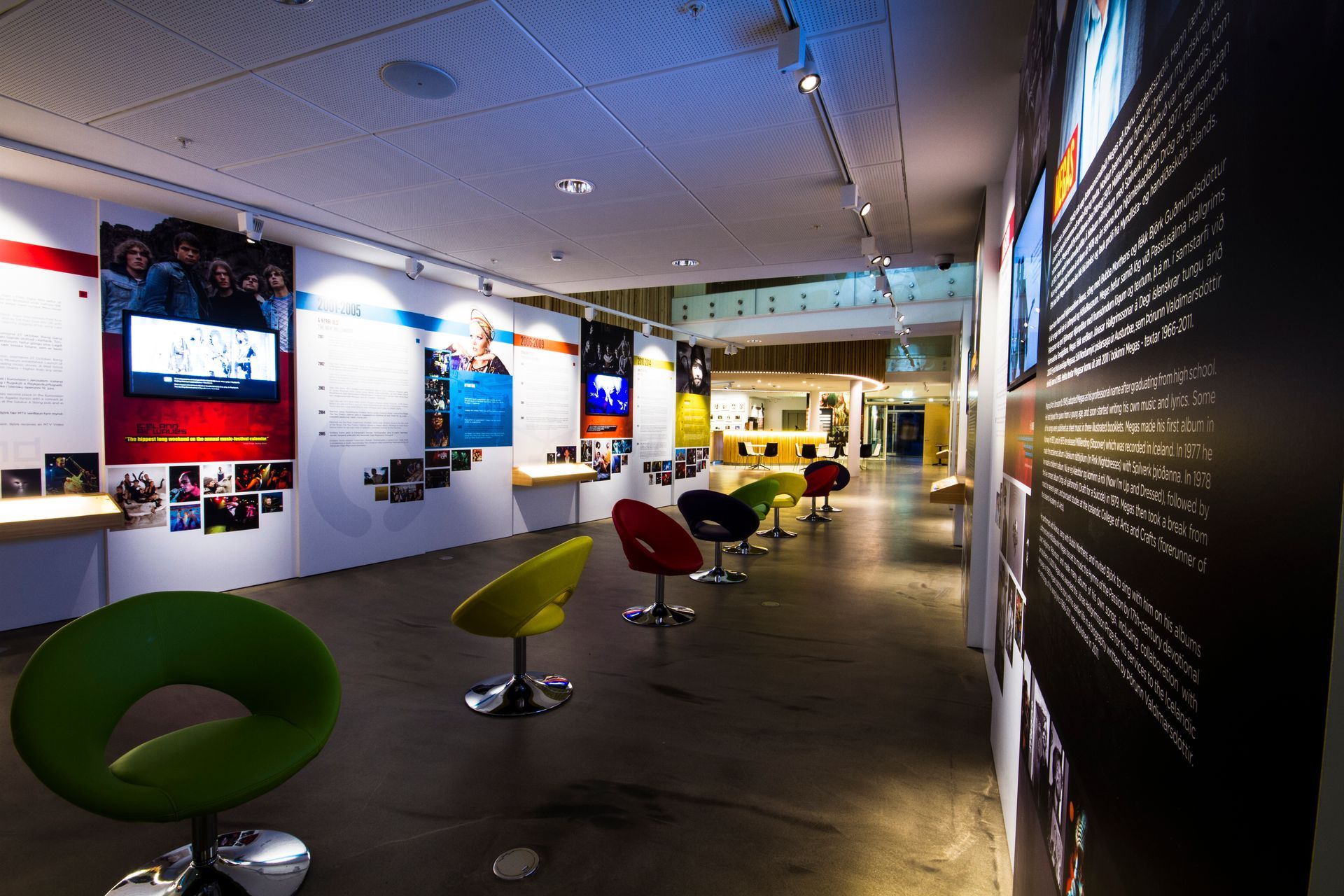
Changing priorities, reduced space, and a different approach to the pop museum component required new thinking and different solutions from those originally planned. It was decided to significantly reduce the amount of text, abandon the multimedia and interactive elements, and identify other approaches suited to the altered spatial conditions. This meant making difficult choices, focusing on the timeline, the flow of events, and the key elements of Icelandic pop history. Many aspects had to be omitted, relying instead on the main narrative elements to carry through. Considerable effort went into selecting, refining, and balancing the exhibition content, and the work was completed successfully thanks to many contributors and a positive spirit.
HLJÓMAHÖLL OPENS
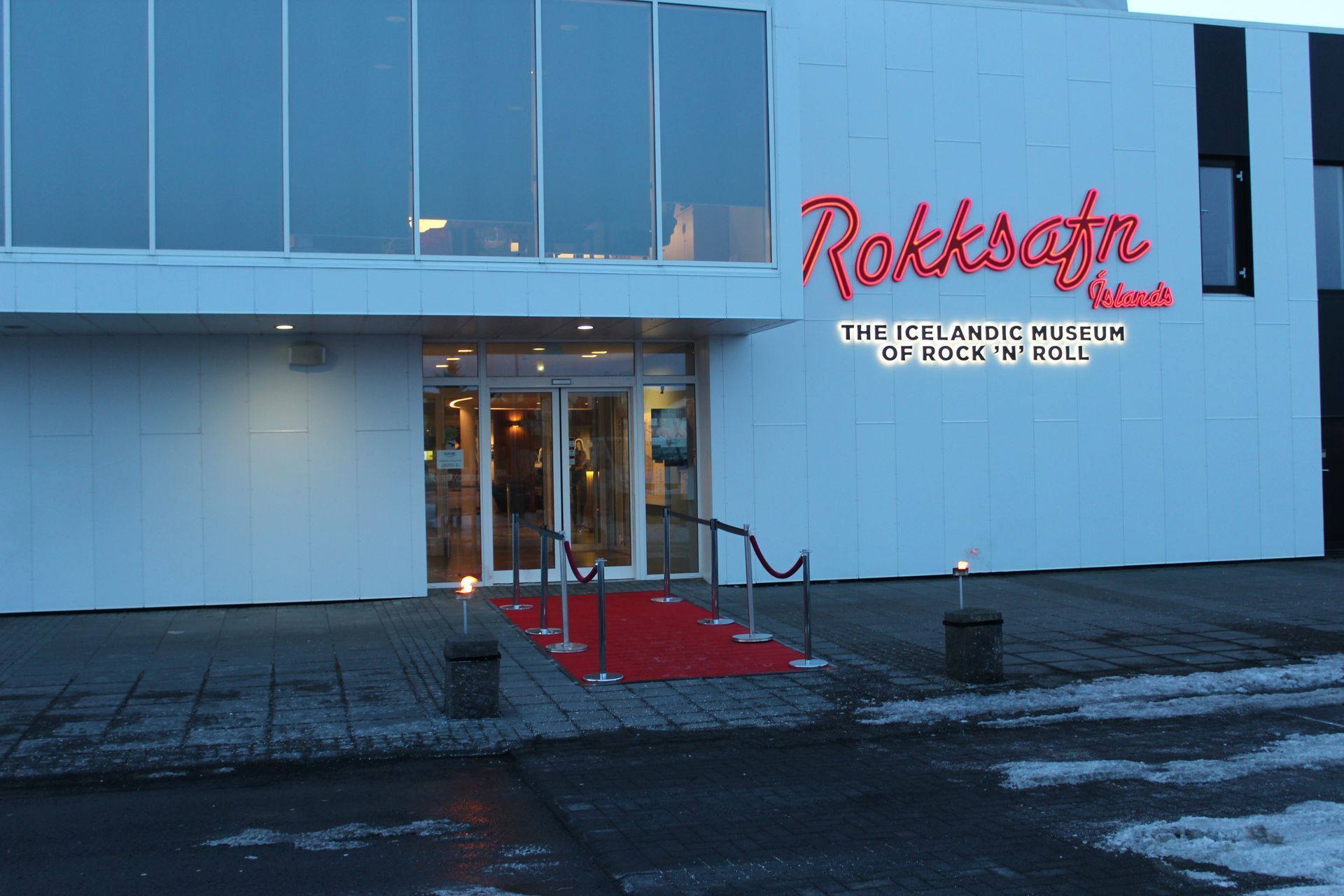
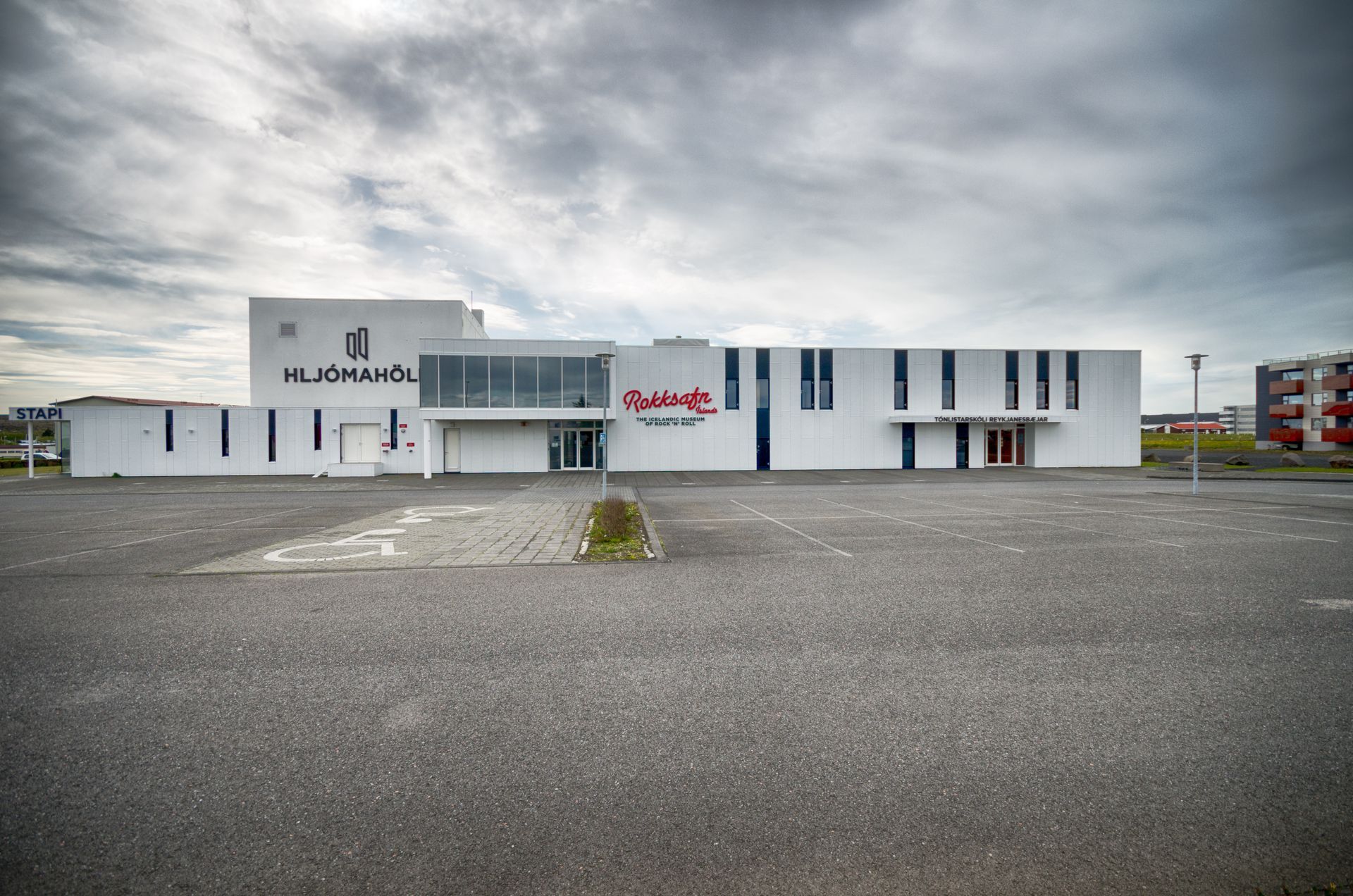
The opening ceremony of Hljómahöll, the Icelandic Museum of Rock ‘n’ Roll, and the Reykjanesbær Music School was held on Saturday, 5 April 2014, and a large crowd gathered to celebrate this significant milestone in the history of music, culture, and museums in Iceland. Six years had passed since the groundbreaking ceremony. Böðvar Jónsson, President of the Town Council, Árni Sigfússon, Mayor, and Kjartan Már Kjartansson, Chairman of the Board of Hljómahöll, each addressed the audience, with Kjartan Már hosting the event.
A diverse musical program was offered throughout the day, featuring performances by the Light Orchestra of the Reykjanesbær Music School, Elíza Newman, Valdimar Guðmundsson, Páll Óskar, Magnús and Jóhann, Magnús Kjartansson, the Suðurnes Choir, and finally Hljómar.
The following description of Hljómahöll’s role was published in connection with the opening ceremony:
Hljómahöll is a new music and cultural center in Reykjanesbær. Its role is to serve as an important venue for vibrant community life, conferences, meetings, and cultural events in Reykjanesbær. The historic community house Stapi is part of Hljómahöll and continues in its traditional role as before. In addition, the new Icelandic Museum of Rock ‘n’ Roll is part of Hljómahöll and is intended to become an attraction for both domestic and international visitors interested in experiencing the history of Icelandic pop and rock music. The Reykjanesbær Music School has also received new and impressive teaching facilities within the building. With the establishment of Hljómahöll, the foundation is laid for increased job opportunities in the creative industries in the Reykjanes region.
This was the first time the name “Icelandic Museum of Rock ‘n’ Roll” appeared in print, formally replacing the name “Icelandic Pop Museum.”
Hljómahöll is well equipped to host concerts on a larger scale as well as smaller performances. The old Stapi Hall had been completely refurbished and acoustically redesigned using the latest technology. The hall seats up to 450 people, with additional capacity for standing events. The smaller hall is named Berg and seats about 130 concertgoers. The hall is named after Hólmsberg in Keflavík. Architect Valdimar Harðarson designed the chairs in the hall and named them Magna. Two high-quality grand pianos were selected specifically by experts for the halls: a Bösendorfer grand concert piano for Stapi, and a Steinway & Sons model C grand piano for Berg. In addition, there is a small cinema inside the Icelandic Museum of Rock ‘n’ Roll called Félagsbíó, named after the cinema in Keflavík that opened in 1955 and closed in 1998. All halls were also equipped with state-of-the-art sound and lighting systems.
ITEMS AND ARTIFACTS
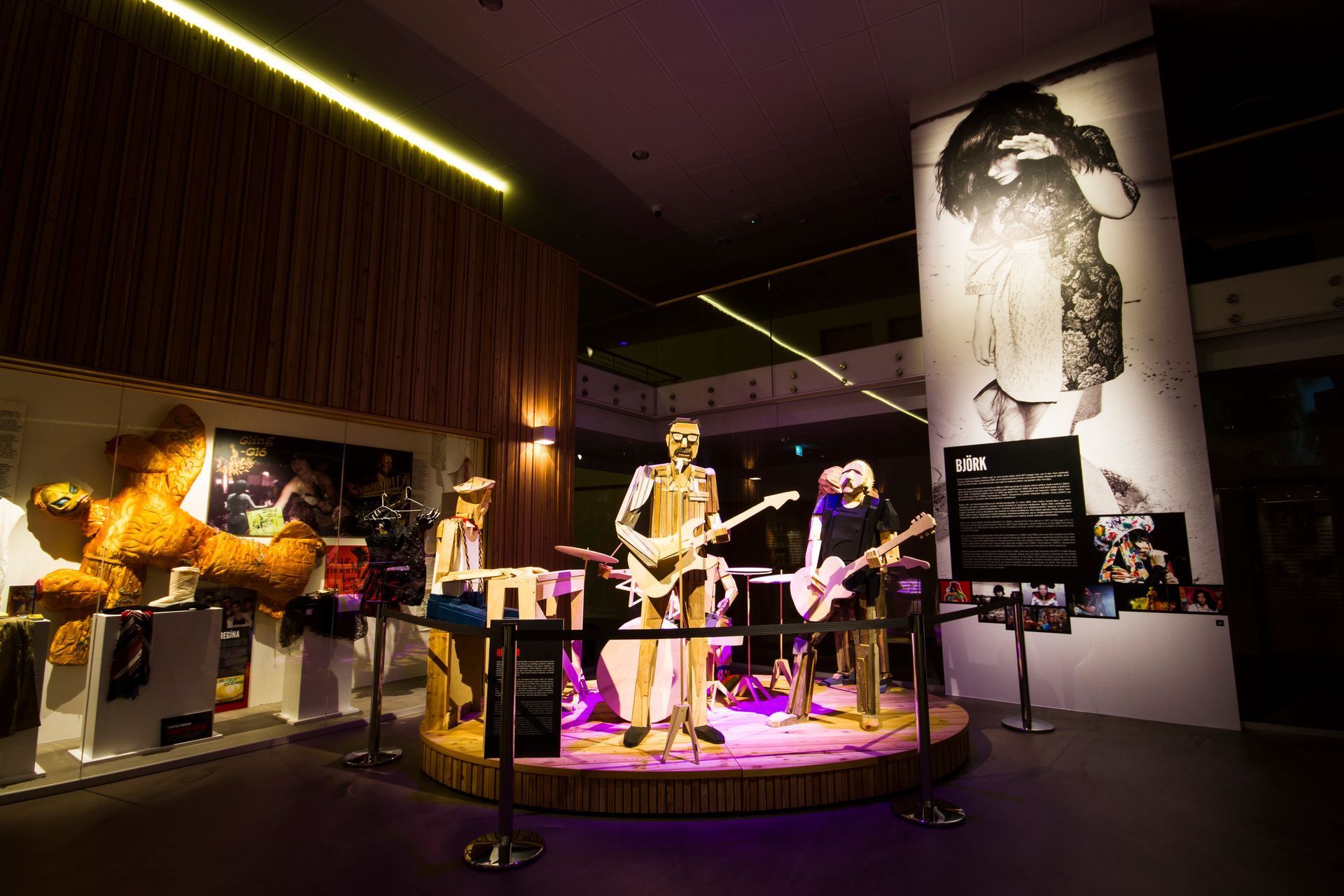
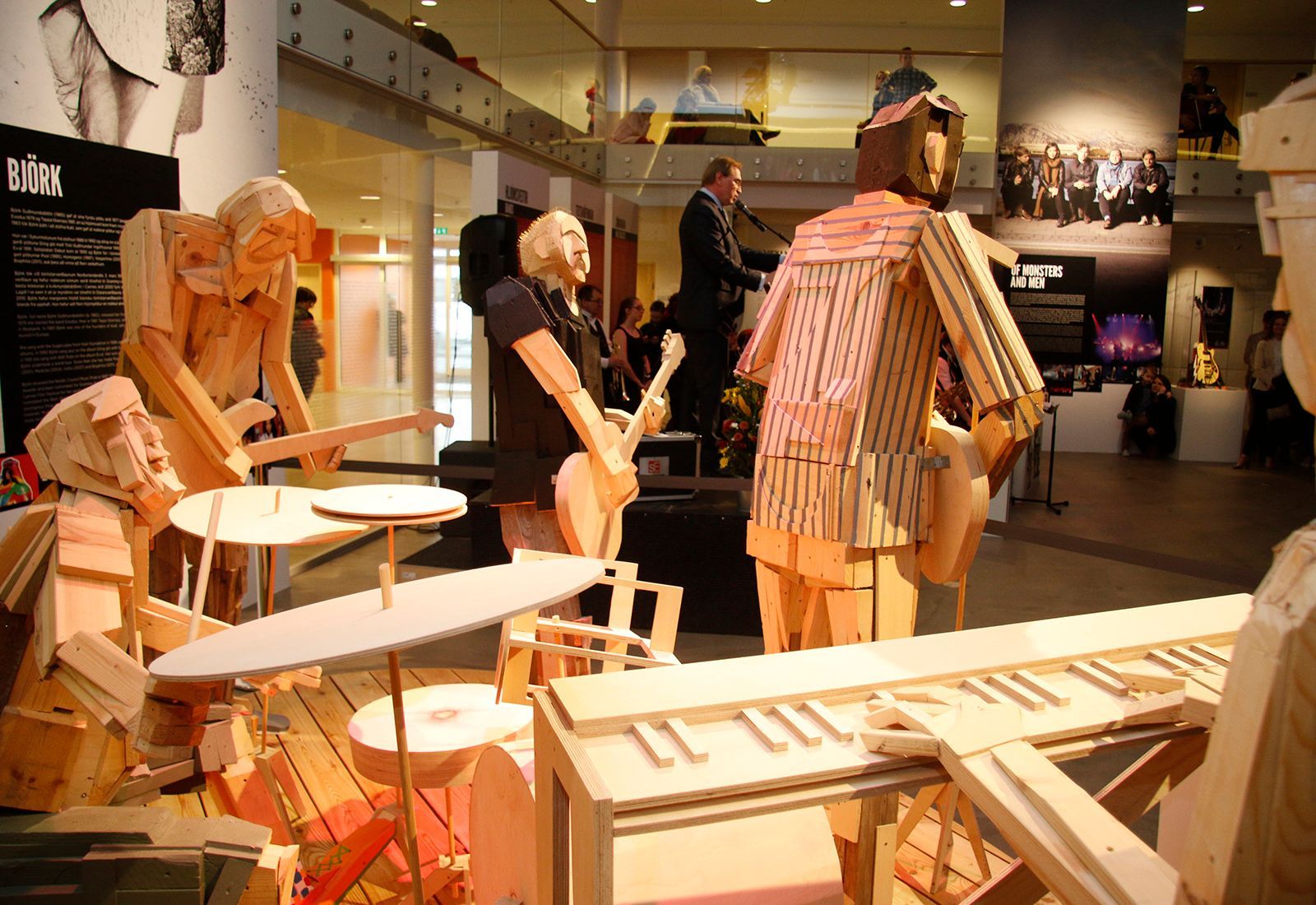
At first, the assumption was that the initial exhibition would be sufficient to attract visitors to the Rock Museum. The team continued to reach out to musicians and collectors, requesting interesting items, instruments, and other objects connected to the country’s pop and rock history. Among the artifacts added early on were a Ludwig drum kit owned by Gunnar Jökull, a dress belonging to Elly Vilhjálms, the dress Emilíana Torrini wore in the music video for “Jungle Drum,” a brass band jacket from Stuðmenn used in the film Með allt á hreinu, a sculpture of Barði Jóhannsson of Bang Gang, a small piano owned by Ragnar Bjarnason, a wooden sculpture of Hjálmar created by the artist Aðalheiður Eysteinsdóttir, and clothing from Rúnar Júlíusson, Haukur Morthens, Helena Eyjólfsdóttir, Anna Vilhjálmsdóttir, Herbert Guðmundsson, and many others. Instruments and items related to Hljómar were placed in a central position in the exhibition, along with artifacts from musicians of the Suðurnes region and from across Iceland.
On 31 March 2014, Páll Óskar Hjálmtýsson donated all of his costumes and performance outfits to the Rock Museum. These were garments from his entire career, beginning with the costumes he collected after performing in The Rocky Horror Show in 1991. Many of the pieces had been specially designed and sewn for him. He also donated all his gold and platinum records, as well as numerous other personal items.
SPECIAL EXHIBITIONS
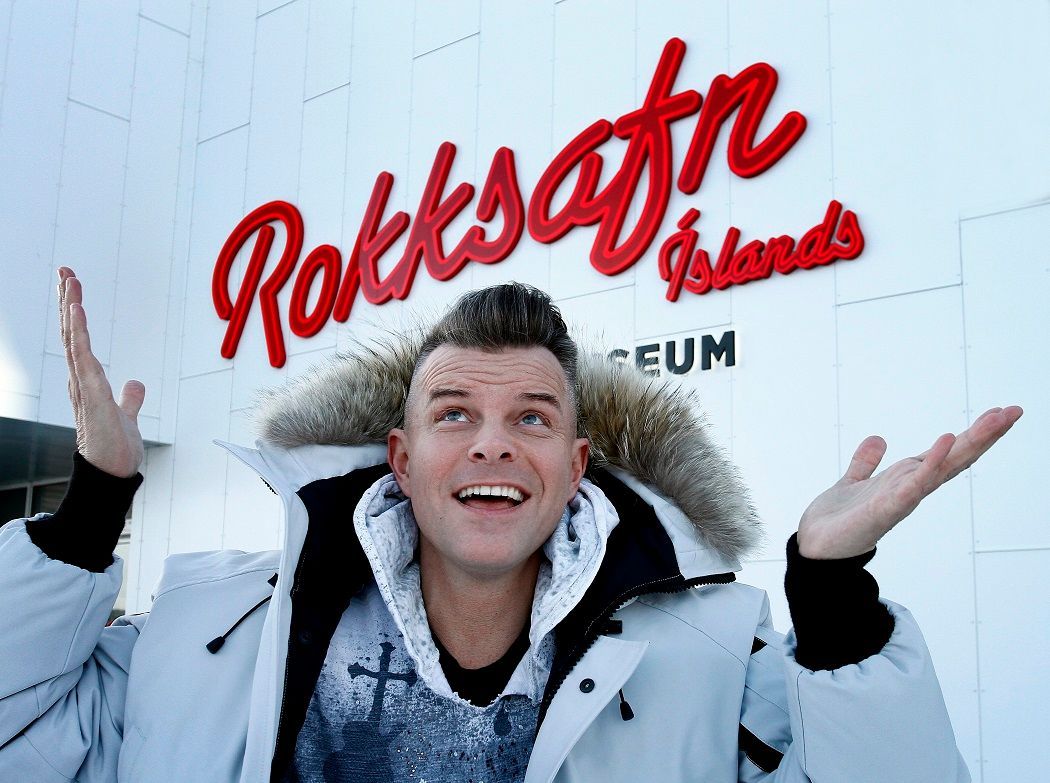
The exhibition was titled Páll Óskar – A Pop Star’s Private Collection. It was divided into several periods of his life and served as an overview exhibition about Páll’s career. On display were clothing, clippings, drawings, jewelry, advertisements, workbooks, calendars, an old Nokia 6110 phone that Páll used for 14 years, and various artworks. Visitors could also sing along with Páll on selected recordings from his career and mix the audio tracks to their own liking.
Páll Óskar was very pleased with the outcome and praised the museum, its staff, and everyone who had been visionary enough to establish and operate such an important cultural institution with such professionalism. After one year, it was announced that 15,594 people had visited the museum, most of them coming specifically to see the Páll Óskar exhibition. It drew attention that at that time approximately 90% of visitors were Icelandic and about 10% were foreign guests. Attendance nearly doubled compared to the previous year, marking about a 100% increase in ticket sales. Rentals of Hljómahöll’s halls also increased by 50% year-over-year, one of the highest growth rates in the country. A few years later, the proportion of foreign guests had risen to nearly 40%.
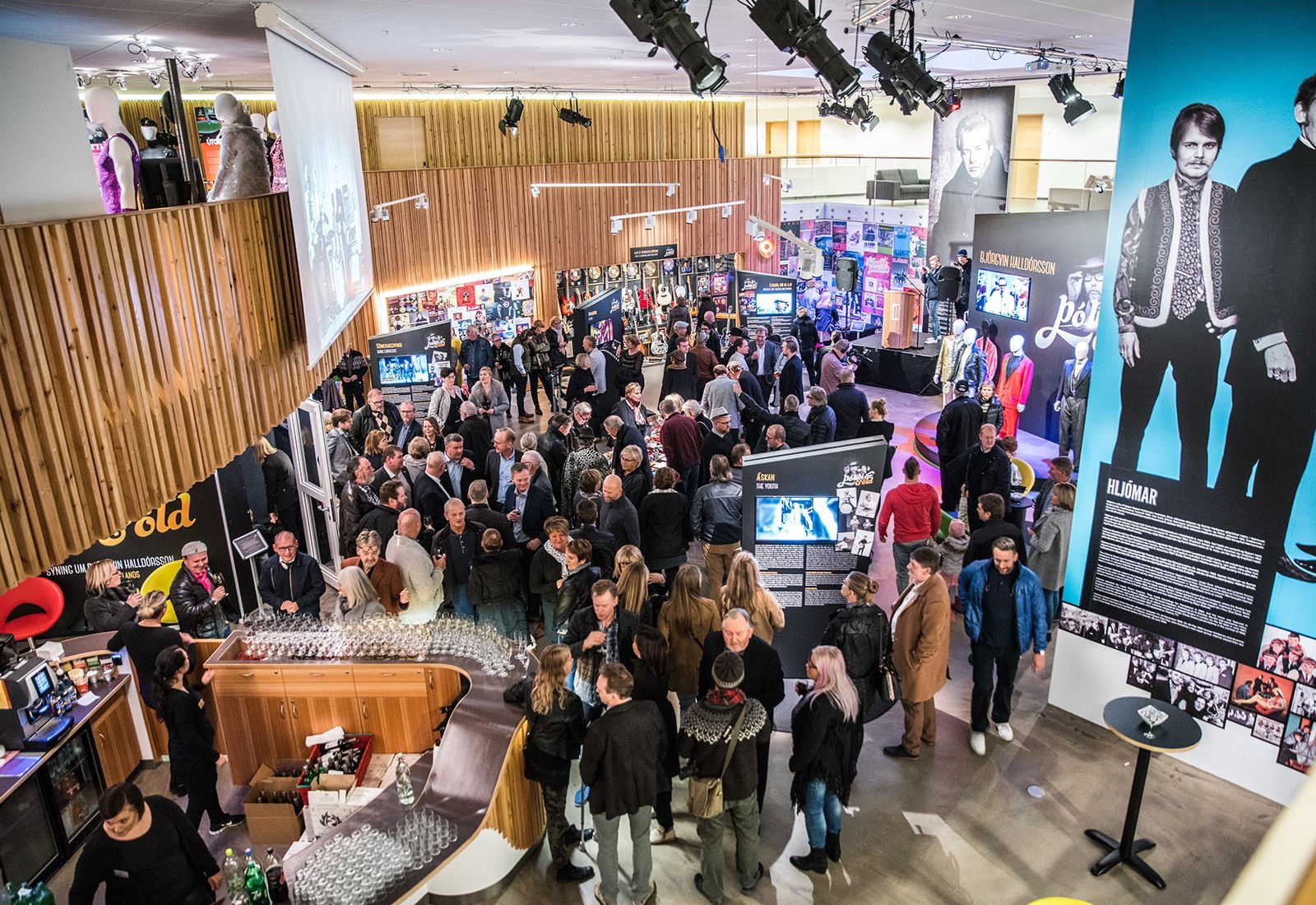
After the exhibition Páll Óskar – A Pop Star’s Private Collection had been on display for a year and a half, it was decided to remove part of it and relocate the highlights to an area known as Nöglin, a raised platform shaped like a guitar pick above the reception area. This was done to make room for the next special exhibition, which had already begun preparation and would attract just as much attention. It opened on 12 November 2016. This was the exhibition Though Years and Ages Pass, which focused on the career of the singer, songwriter, and musician Björgvin Halldórsson. The exhibition highlighted many aspects of Björgvin’s life, including parts of his career not directly related to music. Björgvin is an avid collector, and among his collections are guitars. Many of his guitars were placed in a large glass display case, where they remained long after the exhibition had closed. The exhibition spanned a long timeline and included items preserved by Björgvin’s mother, as well as gold records, lyric sheets, costume pieces, countless photographs and videos, and various other materials he had gathered throughout his extensive career. Visitors were able to sing Björgvin’s songs in the Rock Museum’s vocal booth and mix one of his popular tracks. The exhibition was well received and remained on display for over a year. Björgvin also held a personal and well-attended concert in the Stapi Hall of Hljómahöll on 25 March 2017, accompanied by his band.
On 7 March 2021, the Icelandic Museum of Rock ‘n’ Roll opened the exhibition Melodies of Memories. The exhibition centered on the music collection Melódíur minninganna by Jón Kr. Ólafsson, located in Bíldudalur. Preparation for the exhibition had been underway for quite some time. The exhibition featured numerous items from musicians such as Elly Vilhjálms, Ragnar Bjarnason, Haukur Morthens, Svavar Gests, Stuðmenn, and others. Visitors could also “visit” the museum in Bíldudalur through the use of interactive virtual reality headsets, which allowed them to explore and walk through a digitally captured version of the museum.
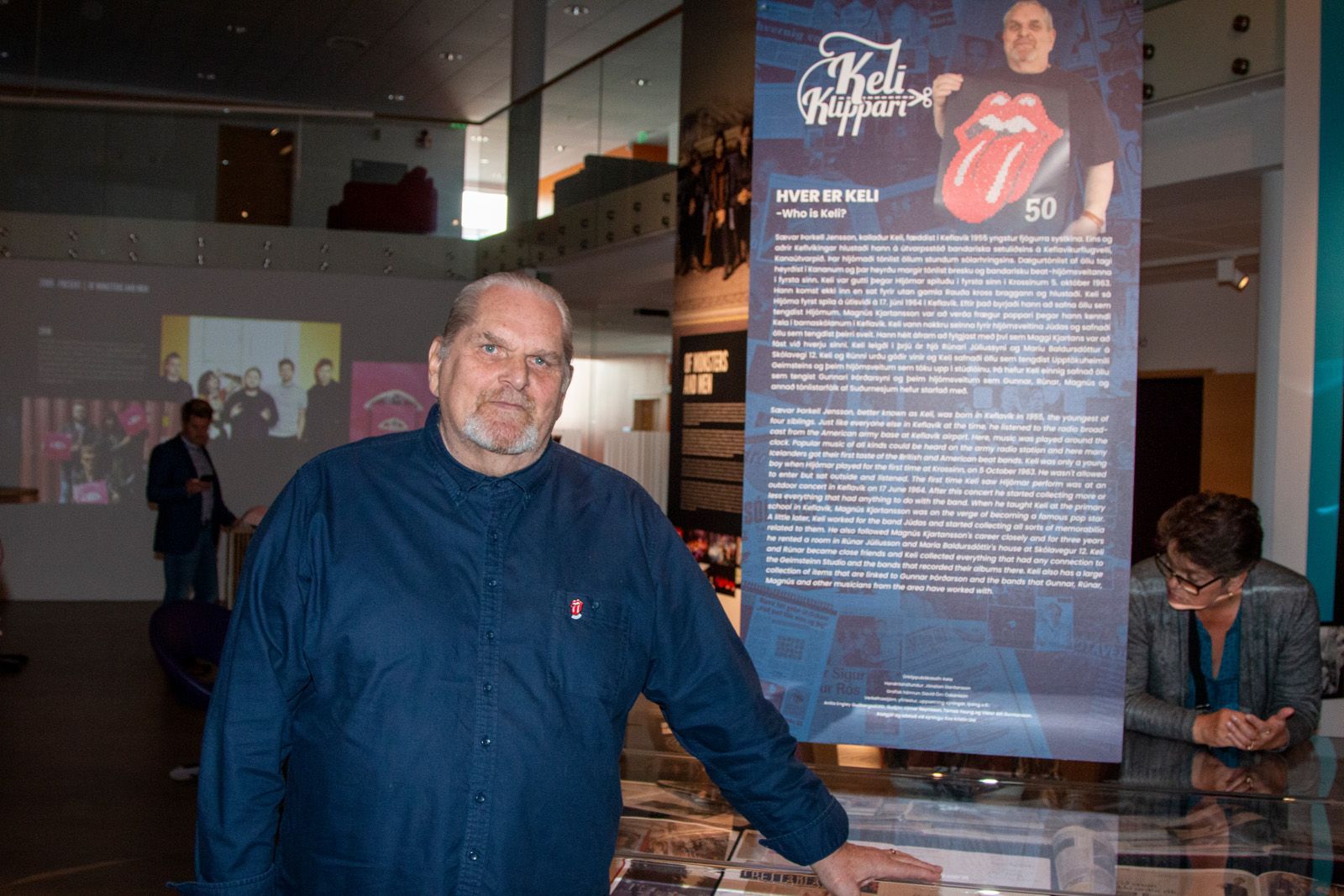
The exhibition Keli’s Scrapbook Library, showcasing part of the extensive scrapbook collection of Sævar Þorkell Jensson, opened in August 2022. Keli, a native of Keflavík, began collecting autographs and newspaper clippings in 1964. He owns one of the largest music-related scrapbook collections in Iceland and has gathered autographs for decades, including signatures from world-famous musicians. When the exhibition was held, the scrapbook collection had reached more than 350 volumes. Among the artists featured in his scrapbooks are Hljómar, Maggi Kjartans, Hjálmar, Bubbi Morthens, Björk, Jónas Sig, GDRN, John Grant, Bríet, Helgi Björnsson, Stefán Jakobsson, Baggalútur, and many others.
CONCERTS AND EVENTS
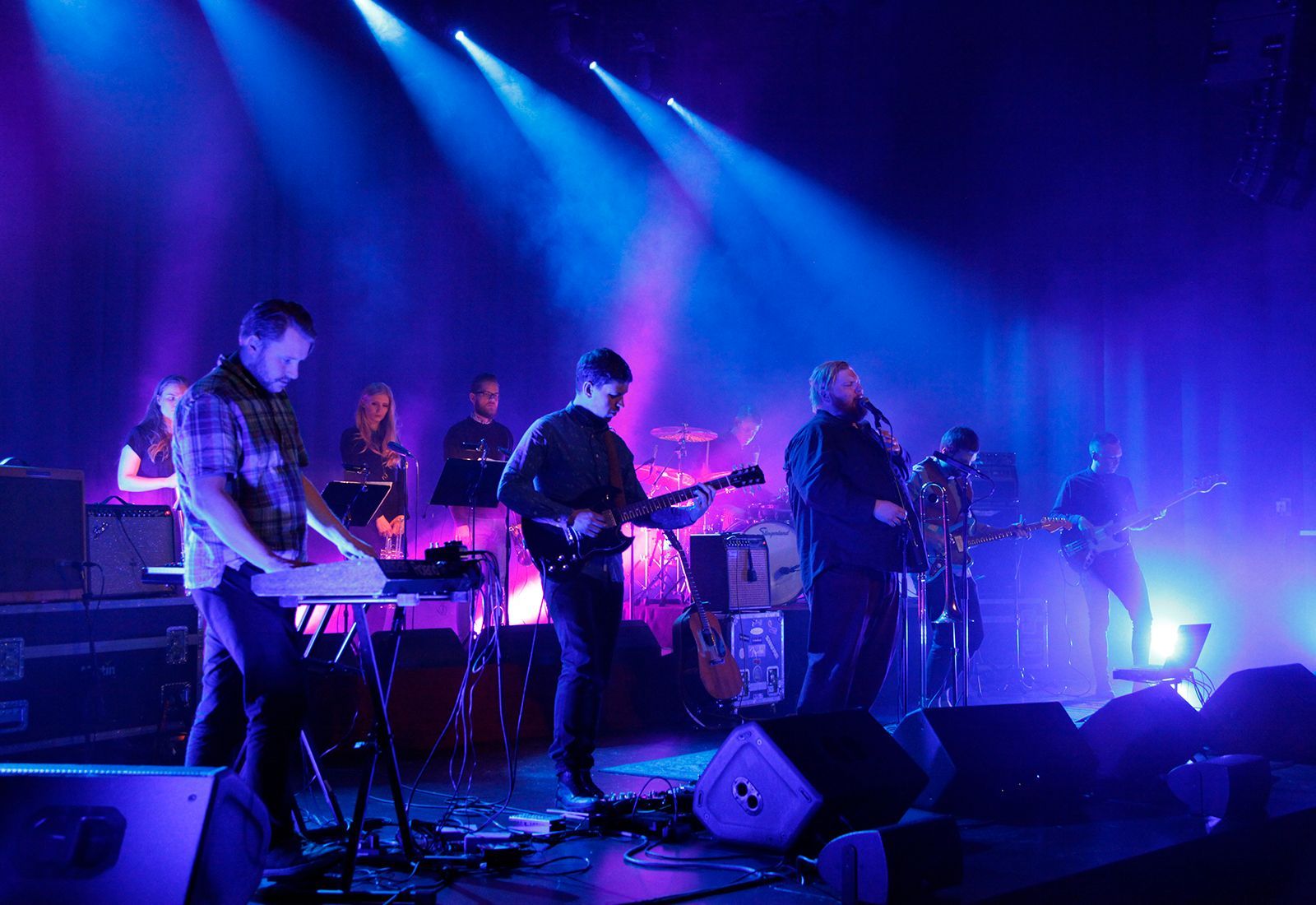
Numerous Icelandic and international bands and artists have performed at concerts in Hljómahöll, both in Stapi and Berg. All have spoken highly of the acoustics and overall atmosphere in both halls, as well as praised the staff for their professionalism.
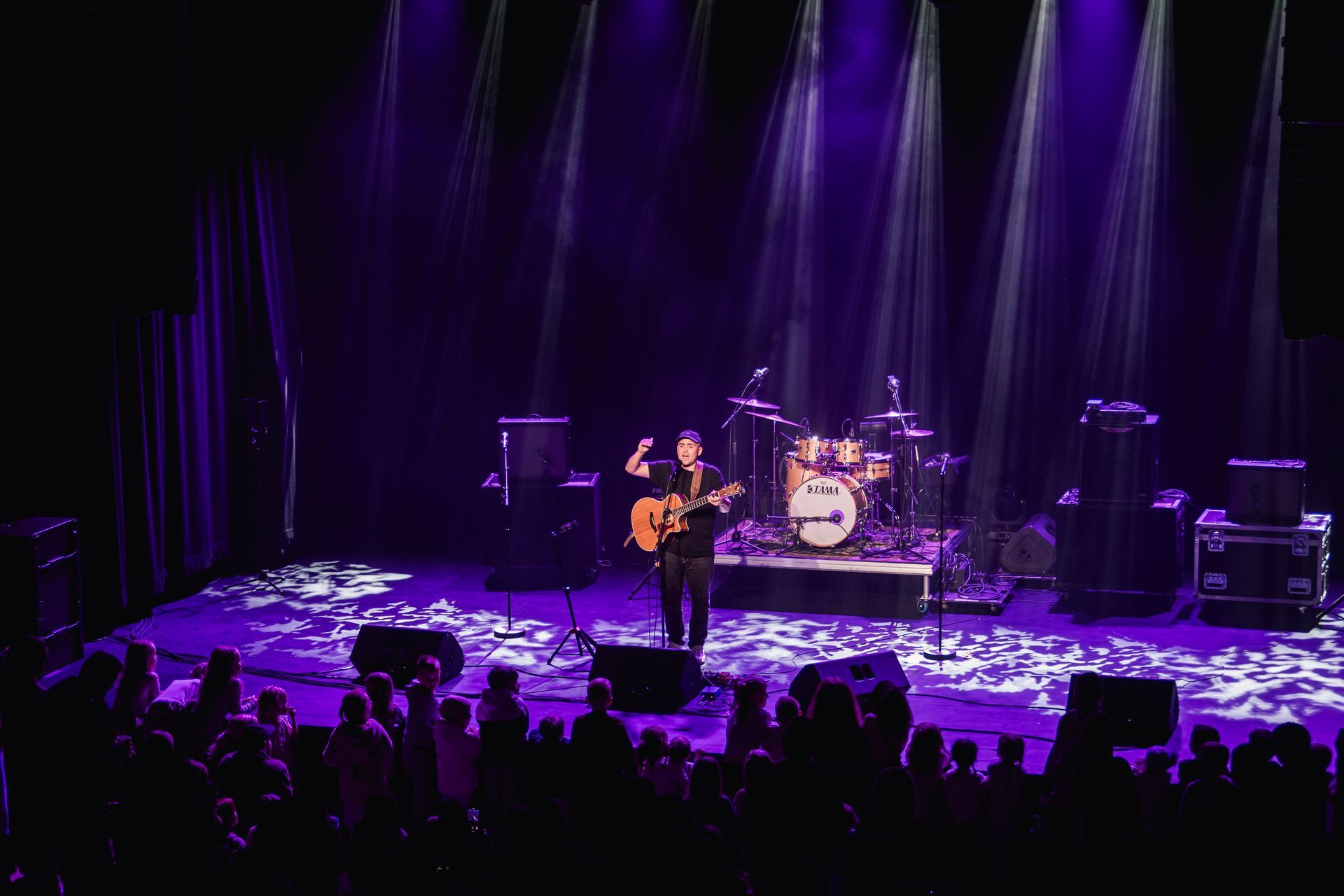
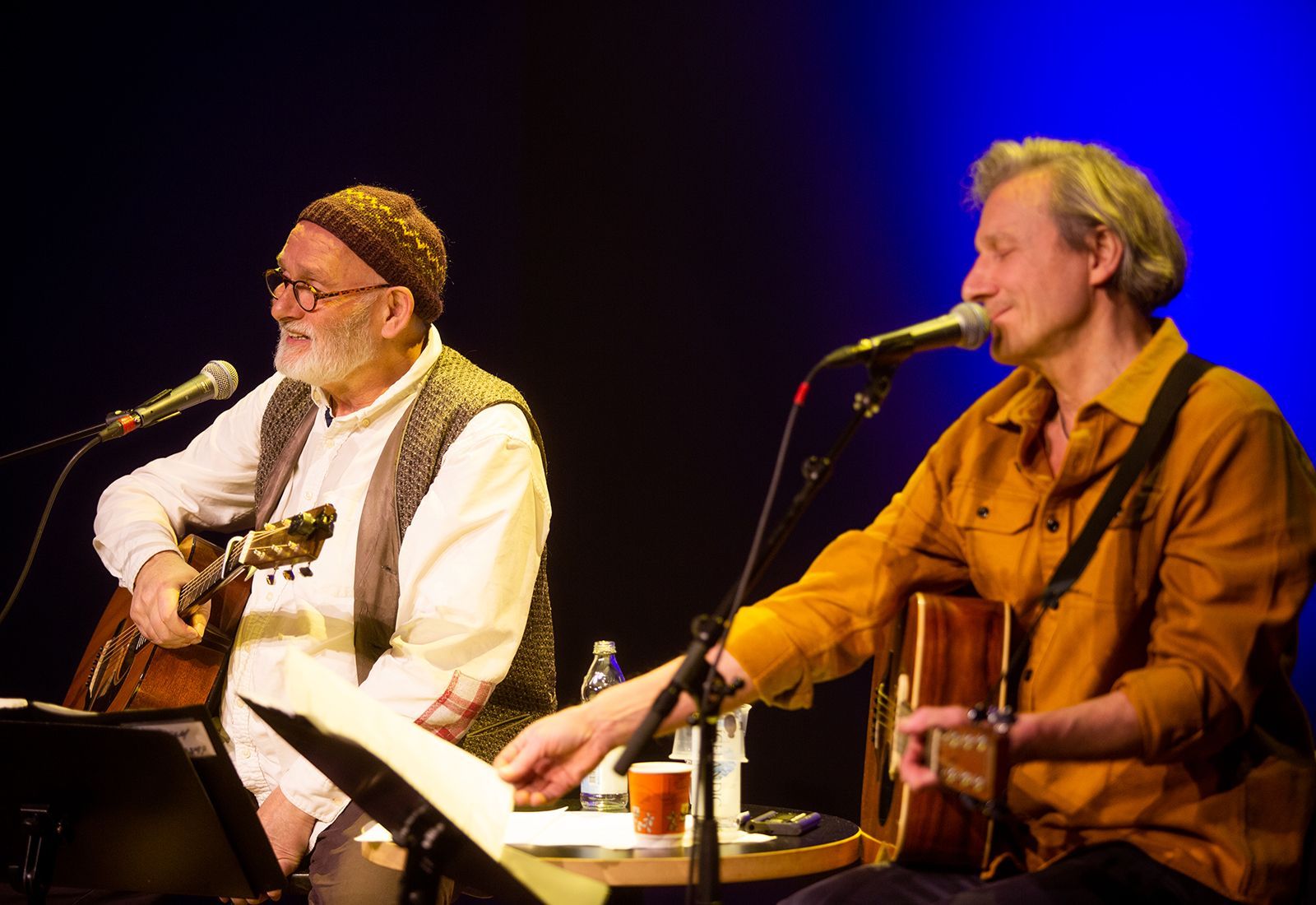
Among the artists who have performed in Stapi and Berg since Hljómahöll opened are Páll Óskar, Magnús Kjartansson, Magnús and Jóhann, Ólafur Arnalds, Björgvin Halldórsson, Elíza Newman, Snorri Helgason, KK, Ragnheiður Gröndal, Júníus Meyvant, Pétur Ben, Jón Jónsson, Hall Ingólfsson, Laddi, Gunnar Þórðarson, Eyþór Ingi, Jóhanna Guðrún, Matthew Santos, Fríða Dís, Pétur Ben, Máni Gunnarsson, JóiPé & Króli, Bubbi Morthens, Arnar Dór, Herra Hnetusmjör, Jóna María, Prins Póló, Emmsjé Gauti, Louis Cole, Ásgeir Trausti, Auður, Marína Ósk, Cate Le Bon, Unnsteinn Manuel, GDRN, Klara Elías, Bríet, Jónas Sig, Aron Can, and Aldous Harding.
Bands that have taken the stage in Hljómahöll’s halls include Hljómar, Skítamóral, Mammút, Fuck Buttons, Hebronix, Eaux, Nýdönsk, Skálmöld, Trúbrot, Moses Hightower, Maus, Baggalútur, GusGus, Valdimar, Dúndurfréttir, Bjartmar & Bergrisarnir, Ylja, Kaleo, Kælan Mikla, SSSól, AmabAdamA, Úlfur Úlfur, Midnight Librarian, Hatari, Deep Jimi & the Zep Creams, Vox, Tindersticks, Demo, Rolf Hausbentner Band, Thurston Moore Band, and Karate. In addition, the Keflavík Male Choir and the Suðurnes Choir have performed at Hljómahöll, as well as comedians Hugleikur Dagsson, Ari Eldjárn, and the comedy group Mið-Ísland.
Hljómahöll provides excellent facilities for meetings and conferences, equipped with a full audiovisual system. Both sound and video can be transmitted to all the halls from any location within the building. All necessary equipment for conferences and meetings is available, such as projectors, screens, computers, microphones, and more. The halls best suited for conferences and meetings are Berg, Stapi, and Merkines. Additionally, classrooms at the Reykjanesbær Music School can serve as breakout rooms for larger events. Over the years, a wide variety of meetings and conferences have been held at Hljómahöll, including the major tourism trade fair Vestnorden, which utilized every corner of the building. Other events include the Nordic Council of Ministers conference, the What Works tourism conference, the Hjallastefnan conference, the Regional Development Conference, and many others. Many companies have also held their annual celebrations at Hljómahöll, as the venue is ideal for such events: guests begin with a welcome drink and appetizers at the Icelandic Museum of Rock ’n’ Roll, followed by dinner and entertainment in Stapi or other halls of Hljómahöll.
HONORS
The Icelandic Museum of Rock ‘n’ Roll received the Innovation and Incentive Award from Visit Reykjanes early in 2019. The award was presented around the same time the museum celebrated its fifth anniversary. On this occasion, Tómas Young, Executive Director of Hljómahöll, stated: “This was a very enjoyable recognition. Visitor feedback has been positive, and people are generally very pleased with the exhibitions. Previously, many thought this was simply an exhibition about the Beatles Town of Keflavík, but in reality everyone has an equal place in the exhibition, as the museum is called the Icelandic Museum of Rock ‘n’ Roll and not the Reykjanesbær Pop Museum.”
In the citation from the Reykjanes Marketing Office, it states:
“The heritage of Icelanders has deep roots, and across the country there are museums and exhibitions that preserve and revive our history and cultural legacy. The Icelandic Museum of Rock ‘n’ Roll, as its name suggests, tells the story of music in Iceland from 1830 to the present day, with a special emphasis on pop and rock music, which is closely intertwined with the modern history and culture of the Suðurnes region.
Although the museum itself has a short history—it opened in April 2014 and celebrates its 5th anniversary this year—it has firmly established itself within the cultural life of the community through events and special exhibitions. New additions are regularly made to the museum’s diverse collection.
The museum’s leaders have shown great ambition in its development and have sought ways to make history engaging and enjoyable for visitors in a professional manner. This is done by using modern technology or developing new solutions, as seen with the record player in the lobby. Visitors can actively participate in the exhibition and enhance their experience, for example by singing in a special vocal booth or picking up an instrument. Guests can also use technology to explore history through the Rock App.
The Icelandic Museum of Rock ‘n’ Roll is unique in Iceland, and having access to such a cultural gem in this region is extraordinary.
The Boards of Reykjanes UNESCO Global Geopark and the Reykjanes Marketing Office have decided to award the Icelandic Museum of Rock ‘n’ Roll the 2019 Innovation and Incentive Award of the tourism sector.”
Hljómahöll received an award on 1 December 2022 on the Day of Icelandic Music, presented at a formal ceremony in Harpa. Tómas Young, Director, accepted the award on behalf of Hljómahöll. The award is called Glugginn (The Window), and the citation reads: “Hljómahöll in Reykjanesbær receives the award for maintaining a home for Icelandic music in Reykjanesbær, with an imaginative museum and a diverse program of musical events over the past year.”
The Icelandic Museum of Rock ‘n’ Roll is a highly important and significant museum, valued by Icelandic music enthusiasts as well as foreign visitors. It is the only museum of its kind in Iceland, although music-related items can be found in some regional heritage museums. Temporary music-related exhibitions have also been held in various places, but these have not been permanent installations. It is essential that the Icelandic Museum of Rock ‘n’ Roll continues to grow and thrive in the coming years and that it continues to preserve and display the objects and artifacts connected to the nation’s rich pop and rock history.
10TH ANNIVERSARY
The 10th anniversary of Hljómahöll was celebrated during the weekend of 5–7 April 2024, with free admission for everyone. On Saturday, 6 April, a formal celebration was held in honor of the anniversary, where guests were invited to explore the Icelandic Museum of Rock ‘n’ Roll and the Reykjanesbær Music School and enjoy a diverse program of musical performances. Mayor Kjartan Már Kjartansson delivered the anniversary address, and performers included the Big Band of the Reykjanesbær Music School, the Bells Choir of the Reykjanesbær Music School, the Guitar Ensemble and the Junior Bells Choir, the Vocal Department of the Reykjanesbær Music School, acts from the school’s rock bands, the jazz trio Þríó, and singers Bríet, Friðrik Dór, Fríða Dís, and Páll Óskar. In addition, an exhibition was presented showcasing the history of Hljómahöll through photographs, along with a vinyl record market and various other activities. People from all around attended and enjoyed everything the event had to offer.
HISTORY AT A GLANCE
The background leading to the creation of Hljómahöll is extensive, and here is a brief overview of several key factors that played an important role.
The Music School in Keflavík was founded on 24 October 1957 at the initiative of Guðmundur H. Norðdahl, with Ragnar Björnsson, the first principal, taking part in its establishment. Herbert H. Ágústsson succeeded Ragnar in 1977 and held the position until 1985. Kjartan Már Kjartansson was 24 years old when he was appointed principal and continued in that role thereafter, except for the period from 1998 to 1999 when Karen J. Sturlaugsson served as principal.
The Njarðvík Music School began operations in autumn 1976, and immediately set about forming a school band. Principal Örn Óskarsson conducted the band and served at the school until autumn 1984. When Örn stepped down, Haraldur Árni Haraldsson succeeded him and remained in the position until the school merged with the Music School of Keflavík. Both schools maintained strong programs and produced many promising students who went on to become well-known figures in Icelandic music.
When the municipalities of Keflavík, Njarðvík, and Hafnir were unified under one administration in 1994, forming Reykjanesbær, efforts soon began to examine areas where operations could be streamlined and improved. One of the key topics was how best to organise music education. A year after the merger, the Njarðvík Music School was restructured into an age-segmented school exclusively for primary-level students. The school offered music education in local primary schools, and all children in 1st and 2nd grade were invited to begin preparatory music studies. After that, students who wished to continue music education could choose the instrument they wanted to study.
At the beginning of 1998, it was decided to dissolve both music schools and establish the Reykjanesbær Music School, which officially began operating on 1 September 1999. Haraldur Árni Haraldsson was appointed principal of the new school and Karen J. Sturlaugsson assistant principal.
The Reykjanesbær Music School initially operated in two locations, Þórustígur 7 and Austurgata 13. Teaching also took place in the town’s primary schools, resulting in a rather fragmented operation. This was considered inefficient, and discussions began about locating all music school activities in one place, preferably in specially designed facilities. At the same time, there were ideas about finding a permanent location for the Icelandic Pop Museum, which had for several years been housed at the restaurant Glóðin, Hafnargata 62 in Keflavík. This led to an exploration of the possibility of constructing a conference and cultural center next to the community house Stapi. This plan ultimately became a reality, and the Reykjanesbær Music School moved into the new building, which had been named Hljómahöll when construction began.
The school facilities are exceptionally well equipped, with 30 teaching rooms, compared to the school’s previous 12 teaching spaces spread across two old buildings. There are 25 classrooms for instrumental and vocal instruction, music theory, and small ensemble and choir groups. The building also includes an electronic music studio, a 50-seat band rehearsal hall with instruments, two rooms dedicated solely to student practice, and two recording studios used by both the school and the Icelandic Museum of Rock ‘n’ Roll. In addition, the concert halls in Hljómahöll are used for student concerts as well as public performances and events.
KROSSINN IN YTRI-NJARÐVÍK
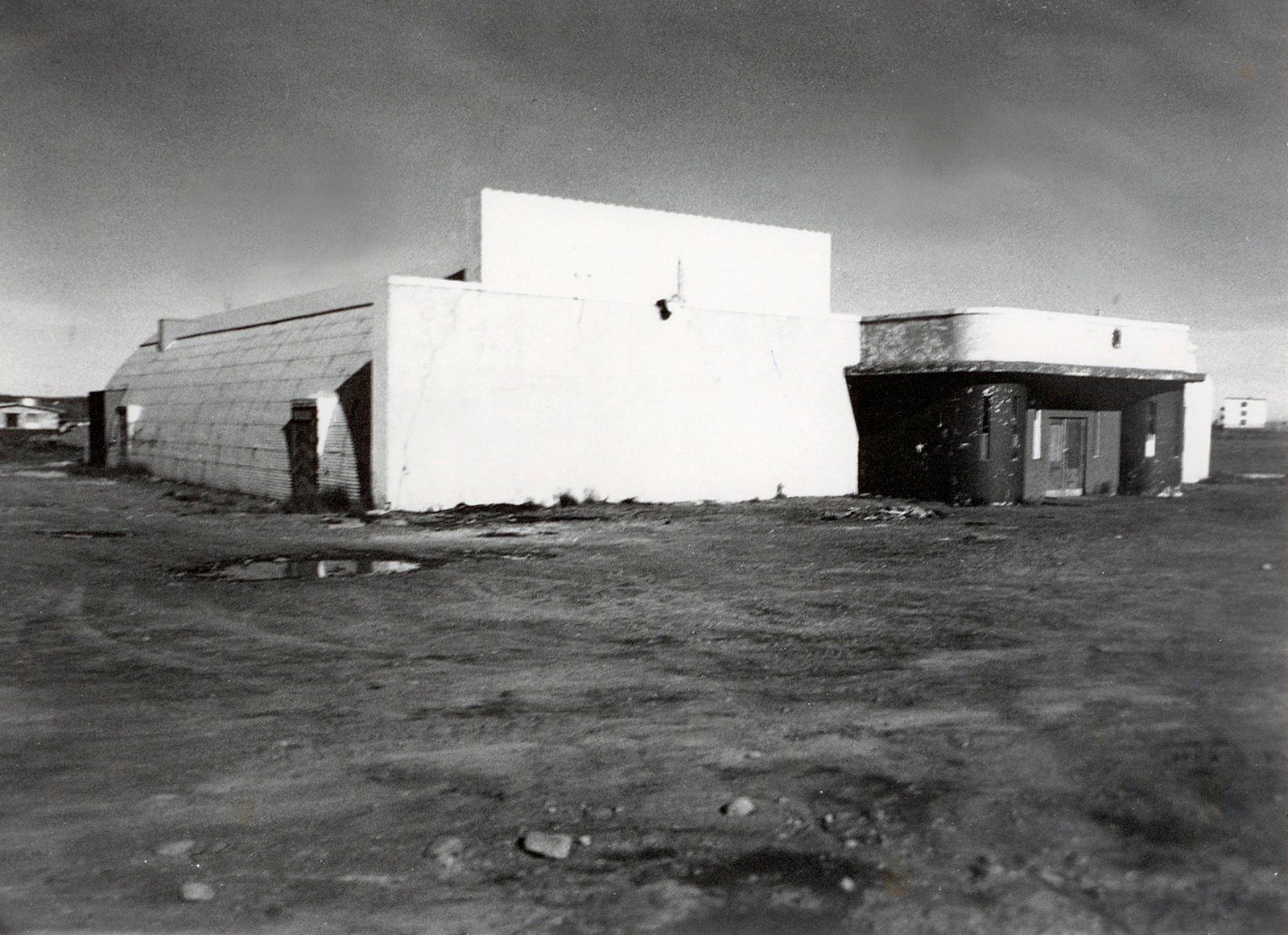
Krossinn in Ytri-Njarðvík was housed in a large barrack built during the war years. The American military applied for permission to construct a Red Cross station in Keflavík in 1942. This request was denied, as authorities feared it would create too close a connection between soldiers and local residents. The military then received permission to build the station in Ytri-Njarðvík, far away from populated areas. There, the Red Cross offered entertainment programs, similar to those it provided across the world during the war. Among the performers was the singer Marlene Dietrich, who entertained the troops in the Red Cross barrack in December 1944.
After the war, the Red Cross station stood unused and was intended to be sold for demolition. The Youth Association of Njarðvík had for several years planned to build a community house but lacked both funding and materials. When the opportunity arose to purchase the Red Cross station in November 1946, the association decided to act. It secured a loan from Magnús Ólafsson of Höskuldarkot and paid 30,000 krónur for the buildings. Permission was granted to keep the structures standing and renovate them, as they had deteriorated after standing idle for a year and a half. A fundraising effort among local residents exceeded expectations, some donated as much as 1,000 krónur, a considerable sum at the time.
The community house Krossinn was formally opened on 14 June 1947. The Women’s Association of Njarðvík and the Youth Association took over its operation, with Ólafur Sigurjónsson, district commissioner and municipal leader, serving in a key role for many years. In 1948, Þórlaug Magnúsdóttir established a church-building fund for Ytri-Njarðvík, while the Youth Association focused primarily on developing sports activities in the community. At a women’s association meeting in 1955, Hlíf Tryggvadóttir mentioned that the local priest wished to hold services in Krossinn from time to time, which was welcomed. She offered to train singers so that a functioning choir could be formed for these services, laying the foundation for the parish choir of Ytri-Njarðvík.
Krossinn was a multipurpose community house from the beginning. It hosted meetings, gatherings, and dances. The dances at Krossinn became famous, and at times fewer people could enter than wished to attend. The hall held around 400 people at maximum capacity, which was considered impressive. Krossinn was also used for various types of community activities. The scout movement and the youth council made equal use of the building alongside other local groups.
Krossinn is perhaps best known as the place where five young boys from Suðurnes took the stage for the first time on 5 October 1963 under the name Hljómar. In the years that followed, they would captivate the youth of Iceland with their music and stage presence. That evening, the boys did not feel fully prepared to play an entire dance event. Still, they accepted the challenge from the young locals who did not want to miss out when a Reykjavík band cancelled at the last minute. The performance went so well that four days later they appeared in the broadcasting studio at Skúlagata 4 to record several songs onto tape, which is now preserved in the National Broadcasting Service archives. The recording did not feature Beatles-style music but instead guitar tunes, ballads, and South American rhythms typical of the era.
Krossinn took on a new role after the community house Stapi became the main gathering place of the district. The building was partly reconstructed in early 1967 and then served as the community’s sports hall for the next decade. It housed physical education classes and sports practices, while the scout group Víkverjar received access to a small hall. The scouts improved the facilities with support from the municipality. In its final years, Krossinn functioned as a youth center, but the building was demolished in 1979. Sigtryggur Árnason, chief of police, supervised the demolition.
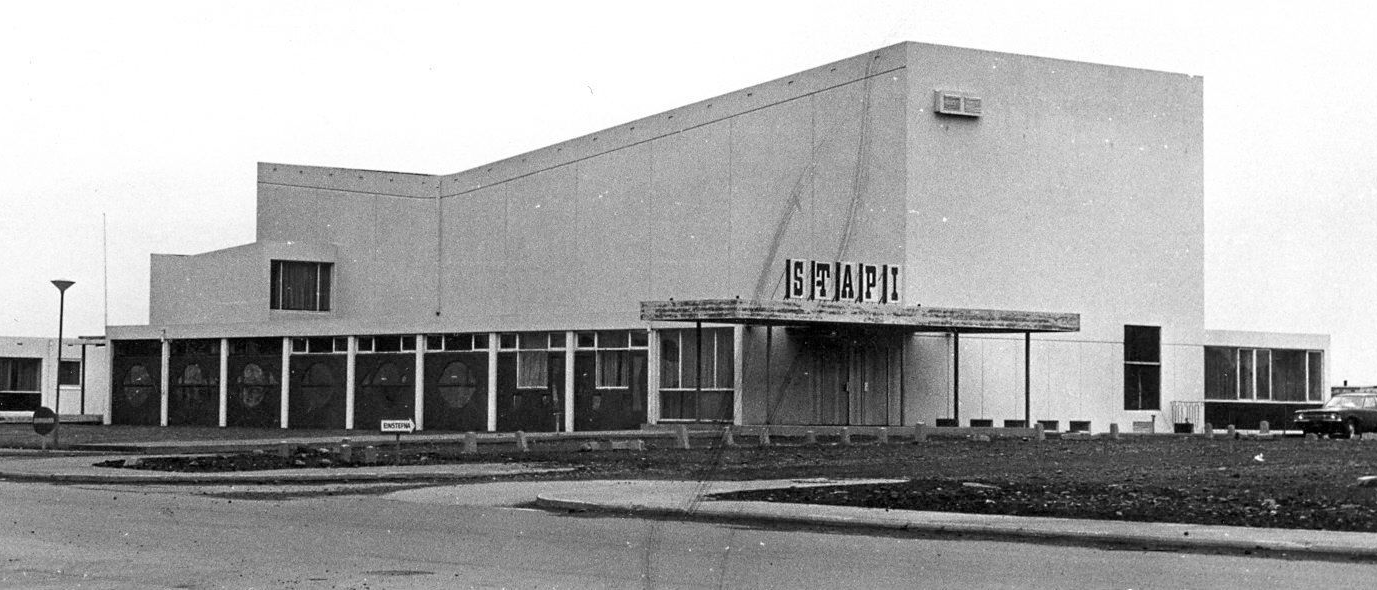
STAPI COMMUNITY CENTER
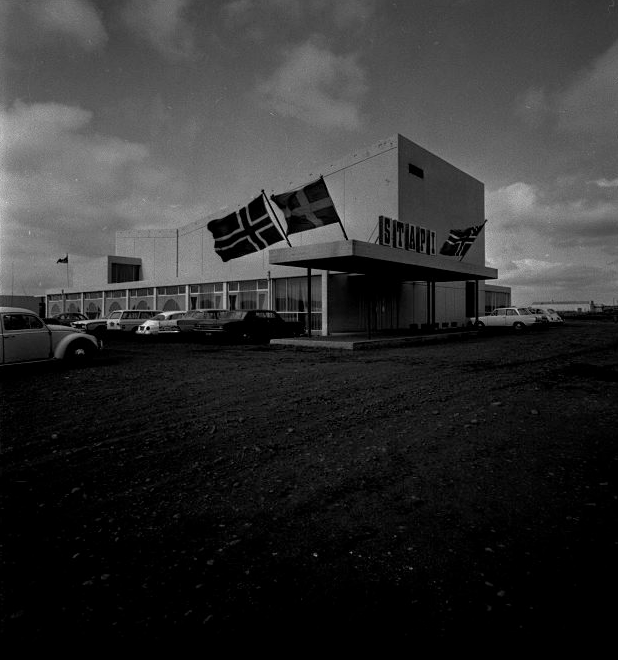
The Youth Association of Njarðvíkurhreppur was founded on 10 April 1944, the same year the Icelandic nation voted to sever ties with Denmark and establish an independent republic. The leading initiator of the association’s founding was Karvel Ögmundsson. Shortly beforehand, a petition was circulated in the district, and 125 people signed it, agreeing to participate in establishing the association. The first elected board members were Ólafur Sigurjónsson, chairman; Karvel Ögmundsson, treasurer; and Oddbergur Eiríksson, secretary. The Women’s Association of Njarðvík was founded on 17 September that same year by 54 women. Its first chairwoman was Hlíf Tryggvadóttir, with Anna Olgeirsdóttir as treasurer and Nanna Finnbogadóttir as secretary. That same year, the church in Innri-Njarðvík was rebuilt and reconsecrated, having been decommissioned around 1916. Shortly thereafter, the reading society Fróði was founded with strong support from both the youth and women’s associations, and on its foundation the Njarðvík Library was established.
On 24 February 1949, a building fund was created to enable the construction of a fully equipped community house for the residents. Although a significant sum was raised, construction could not begin immediately. A special investment permit was required to undertake such a large-scale project. Due to import restrictions at the time, a permit was needed to purchase cement and other necessary materials for a building of this size. The first application was submitted in 1953, and it was resubmitted annually until the permit was finally granted four years later—just two days before the district’s sports field was inaugurated. The sports field, located near Krossinn, was considered a remarkable structure because it was a grass field, among the first of its kind in Iceland. It was opened at a ceremonial event on 16 June 1957.
It was considered sensible to build the community house at the center of the sports grounds, creating a sort of nucleus for the settlement. Landowners donated a 17,000-square-meter plot for the community house in 1957, and building permits were approved that same year. Construction began in September 1958 after a joint ownership agreement was established between the Youth Association, the Women’s Association, the scout association, and the municipality for the development and operation of the new community house. Construction progressed vigorously but with several lengthy interruptions, and the project continued over the next seven years. When the building was inaugurated on 23 October 1965 in a formal ceremony, it was fully completed inside and out. Just over a year earlier, the meeting hall and social room had already been put into use.
The renowned architect Sigvaldi Thordarsen designed the building, and it bears his distinctive style. Sigvaldi was unable to complete all the detailed drawings before his passing, but Þorvaldur Kristmundsson finished the remaining work. Sigurður Thoroddsen handled the ironwork drawings and engineering components. The master carpenter was Skarphéðinn Jóhannesson, Snorri Vilhjálmsson handled the masonry, and Guðbjörn Guðmundsson oversaw electricity and lighting. Ágúst Guðjónsson’s metal workshop installed the ventilation system, Áki Gränz managed all painting, and Ásgerður Búadóttir designed the wall decoration on the building’s south side.
The total cost of construction came to 9.5 million krónur, not including substantial additional costs for interior furnishings and equipment.
When the building opened, a large number of invited guests and district residents attended the significant event. Ólafur Sigurjónsson, district commissioner and head of the building committee, delivered the inauguration speech, outlining the construction process and expressing gratitude to Sigvaldi Thordarson and Þorvaldur Kristmundsson for their excellent design work. Ólafur then formally handed the building over to the newly appointed house board, chaired by Oddbergur Eiríksson. Numerous speeches followed from various officials, including municipal leaders from Njarðvík, Keflavík, Sandgerði, and representatives of the church and national youth associations. During the ceremony, the building was given the name Stapi, a fitting choice as Stapi is a well-known landmark on the Suðurnes peninsula.
Guests then toured the building, admiring its features. Of particular interest was a stone installation in the main entrance hall, created from lava and clay by Ragnar Kjartansson. An overview exhibition of paintings by Magnús Á. Árnason opened in the adjacent hall, followed later that week by an exhibition of works by Hafsteinn Austmann. The following days and weeks were filled with celebratory events, including a well-presented local history exhibition.
The Stapi Community House was considered an elegant and impressive building, both inside and out. The floor area measured 1,300 m², and the volume was 6,500 m³. The main hall seated about 450 people (and many more standing). In addition, there were balconies for 150 people and a side hall accommodating around 100 guests. A smaller hall was intended for meetings and smaller gatherings.
The Stapi Hall boasted the second-largest stage in Iceland at the time. It was equipped with advanced lighting and spacious backstage dressing rooms. Upon opening, the municipal library was allocated space in the building, and social rooms were provided for all groups involved in its construction—the youth and women’s associations, the scout group Víkverjar, and the municipality of Njarðvík.
The Reykjavík Theatre Company performed Ævintýri á gönguför in Stapi, and the National Theatre toured with Krapp’s Last Tape and Jóðlíf after the building opened. Residents soon established the Njarðvík Theatre Company, which premiered its first play in Stapi on 4 February 1966.
Pastor Björn Jónsson conducted services in the small hall, establishing the tradition of holding Christmas and Easter services and other church ceremonies in Stapi. A chapel was planned to adjoin the community house, as services had occasionally been held in Krossinn due to the considerable distance between Innri- and Ytri-Njarðvík. This had long been an important matter for the Women’s Association, which sought to foster vibrant church life in Ytri-Njarðvík. The chapel, however, was never built, and many years passed before a new church was constructed. Work on the new church, designed by Örnólfur Hall and Ormar Þór Guðmundsson, began in September 1969, and it was consecrated on 19 April 1979.
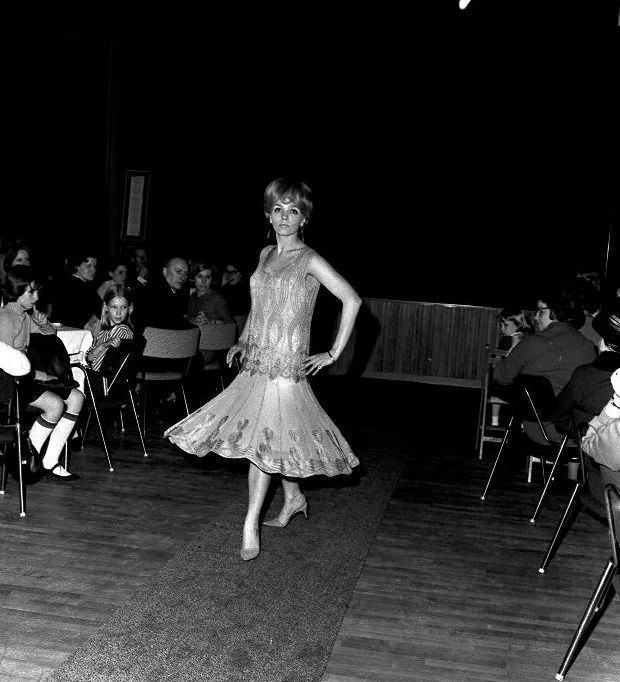
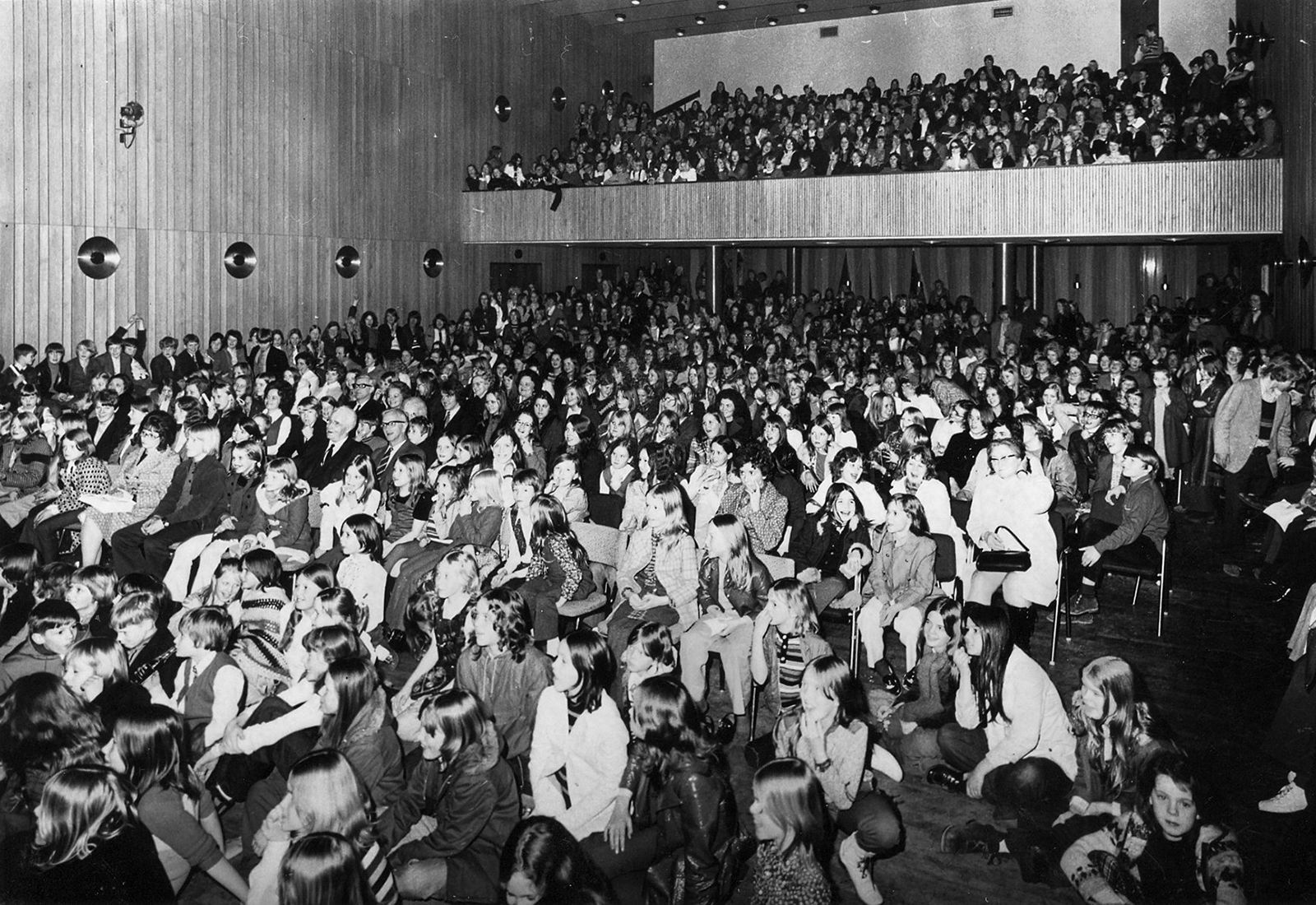
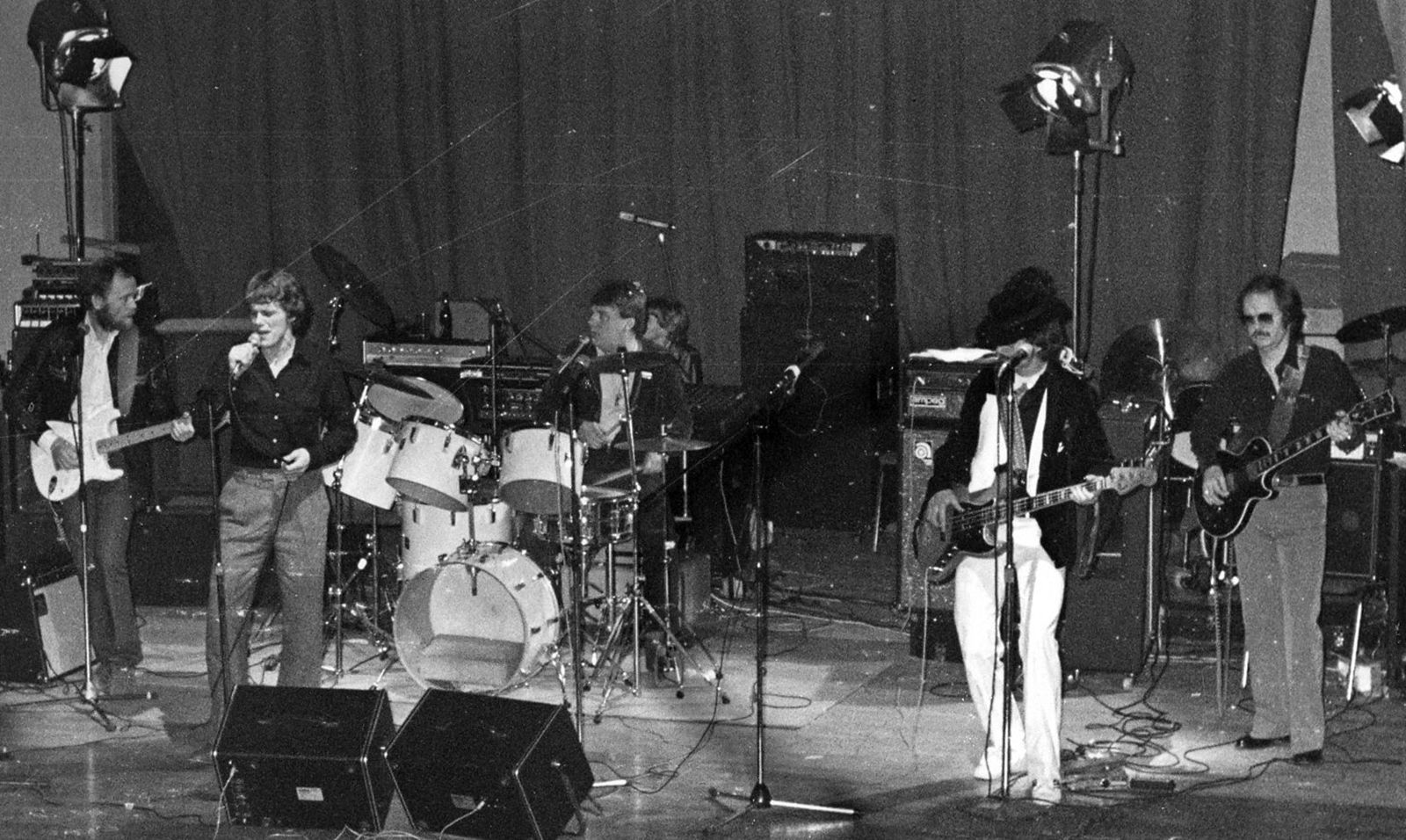
The community house Stapi, often referred to simply as “Stapinn”, quickly became one of the most popular gathering places in Iceland, attracting visitors from afar. It hosted dances, children’s events, scout activities, meetings, conferences, concerts, theatrical performances, and countless other events. For people of the time, Stapinn was best known for its unforgettable dances, where many of Iceland’s leading bands performed and where numerous young people took their first steps toward fame and where many couples first met.
Large national organisations rented the house for their assemblies and conferences. The Iceland Symphony Orchestra performed there, and the National Theatre offered touring productions. For decades, Stapinn was a true cultural house serving the entire region.
Stapi was jointly owned for many years by four entities: the Youth Association, the Women’s Association, and the municipality of Njarðvík, each holding 33%, with the scout association Víkverjar holding 1%. The Njarðvík Library was located in Stapi for a time, but when it outgrew the space, it was moved and merged with the school library.
ICELANDIC POP MUSEUM/ THE ICELANDIC MUSEUM OF ROCK 'N' ROLL
The origins of the Icelandic Museum of Rock ‘n’ Roll stretch back several decades. The idea of a museum dedicated to objects and memorabilia from Icelandic popular music history had been discussed for years before the band Stuðmenn rented the restaurant Sigtún on Suðurlandsbraut for two weeks over Christmas and New Year in 1984. They set up a temporary pop-music museum in collaboration with filmmaker Óskar Jónasson. Stuðmenn then held a New Year’s Eve dance, which was televised, and invited various dignitaries, including Marshall Brement, the U.S. ambassador, and Evgeniy A. Kosarev, the Soviet ambassador. Both were called onto the stage and asked to sing the song Nótt í Moskvu together. When the two-week period ended, all items were packed away or returned to their owners. There were no further plans to repeat the experiment, but the seed had been planted.
When restaurateur Tómas Tómasson opened the Hard Rock restaurant in Kringlan on 25 July 1987, he received a wide variety of artifacts, instruments, clothing, and more from Hard Rock headquarters in the United States. These restaurants were well known for the owner’s passion for collecting memorabilia and instruments connected to international pop icons, which were displayed in Hard Rock venues worldwide. Soon, however, the Hard Rock in Reykjavík began receiving gold records from Icelandic musicians, as well as various items and memorabilia that were put on display. Although this was a welcome initiative, many wanted to go further and establish a museum or institution that could properly preserve Iceland’s pop-music heritage.
Among musicians from Keflavík, the idea emerged to create an exhibition in their hometown that would celebrate the Beatle Town identity. Hljómar were among the first Icelandic beat bands, and several other beat groups from Suðurnes soon followed. This was considered remarkable, and people quickly began referring to Keflavík as Iceland’s “Beatle Town,” drawing comparisons to Liverpool in England. A working group—initiated by Kjartan Már Kjartansson, then principal of the Keflavík Music School—began preparing the exhibition Bítlabærinn Keflavík (Beatle Town Keflavík). Jón Sigurðsson assisted by gathering financial support from companies and patrons. The exhibition opened on both floors of the restaurant Glóðin, Hafnargata 62 in Keflavík, on Saturday, 11 October 1997. It was dedicated to musicians from Suðurnes who had shaped Icelandic popular music between 1963 and 1976. It was built on newspaper clippings, posters, album covers, accounting documents, equipment, instruments, and various other materials that had been collected. Those behind the initiative included Kjartan Már, musicians Rúnar Júlíusson and Guðmundur Hermannsson, restaurateur Stefán Viðarsson, interior designer Bryndís Eva Jónsdóttir, exhibition designer Björn G. Björnsson, and lyricist Þorsteinn Eggertsson. It is no exaggeration to say that Rúnar Júlíusson contributed the most to bringing the project to life, supported strongly by Kjartan Már, who continued to assist the museum in every way thereafter. Preparation time was short—just over six months before the exhibition opened.
The Icelandic Pop Museum received its legal registration number in May 1997, but it was formally founded in 1998. Its home and base of operations were initially at the restaurant Glóðin, where the Beatle Town Keflavík exhibition remained for several years. The restaurant’s menu even included dishes named after elements of pop-music history. A new website was launched on 5 October 2003, on the 40th anniversary of Hljómar. It announced that the Reykjanesbær Heritage Museum had taken responsibility for the Icelandic Pop Museum and would receive all objects and memorabilia connected to Icelandic pop history. The website’s purpose was to raise awareness of the Pop Museum and encourage the preservation and collection of music-related items. It was also intended as a resource for those interested in Iceland’s pop-music history, with the goal of documenting it in the future.
In 2004, the first ideas for building a cultural center were presented to the residents of Reykjanesbær. While the community discussed creating a permanent home for both the Pop Museum and the music school within a new cultural complex, a new pop-music exhibition was organized. The exhibition Stuð og friður (Groove and Peace) opened in the Duus Museum Buildings on 17 June 2005. It focused on the period from 1969 to 1979, which began with radical social movements and aspirations for a better world. The early years were marked by hippie culture, musical experimentation, and the use of mind-altering substances, but after 1973 the emphasis shifted toward lighter genres, glam rock, disco, jazz-rock, and popular mainstream music. By the end of the decade, punk and new wave had reshaped the musical landscape. The exhibition was designed by Ólafur Engilbertsson, who had turned his attention to exhibition design and had previously organized Humar eða frægð at the Reykjavík Art Museum–Hafnarhús and at Spitz Gallery in London. That exhibition celebrated the 16th anniversary of the record label Smekkleysa in 2003.
The exhibition Vagg og velta – The Rock Years in Iceland opened on 31 March 2007 in the Duus Museum Buildings. It explored in words and images the early years of rock music in Iceland, beginning in earnest in spring 1957. Rock was a significant challenge to Icelandic society, which was transitioning from a rural farming culture to an urban, modern community. The new musical craze was known in Icelandic as vagg og velta, rugg og ról, or rokk og ról, the last of which became the established term. During this period, the generation gap emerged, and terms such as “teenagers” and “youth” became part of the cultural vocabulary. The exhibition remained on display until 2009 and was the final exhibition under the name Icelandic Pop Museum, as the museum’s name was officially changed to the Icelandic Museum of Rock ‘n’ Roll when Hljómahöll opened.
This summary was prepared by Jónatan Garðarsson in March 2024.